





Finance and Business Strategy

How healthcare organizations can build resiliency and drive growth in a challenging financial environment

Published
March 31, 2025
5:50 pm
Sponsored by Guidehouse
Hospitals and health systems face a multitude of financial and operational challenges, from absorbing the transition of baby boomers coming off commercial insurance by 2030 to the increase in high-deductible health plans.
A recent report published by Guidehouse based on an HFMA executive survey highlighted some of the ways organizations are adapting to meet the moment. From 2019 to 2023:
- 75% of healthcare providers increased their digital and IT budgets by an average of 18.3%, with 1 in 5 citing increases of more than 30%.
- 33% of respondents have initiated new or expanding relationships with outsourcing partners.
- 25% of respondents have implemented new digital and innovation programs or are initiating enterprisewide transformation efforts, supporting their commitment to improving the patient and provider experience while reducing costs.
In this HFMA Executive Roundtable, five healthcare revenue cycle management executives share their own strategies for building and maintaining financial resiliency.
How has your patient access strategy enhanced revenue capture and improved the patient experience, and what challenges did you face in the process?
Stephen Forney: When we implemented Epic back in 2018, it wound up exposing all the weaknesses that we had across rev cycle and across patient access for the whole organization. The last five years have been an exercise in creating standardization and optimization of the tools in Epic across our multiple sites. Getting consistent training and consistent application of tools across those different areas has resulted in significant improvements and a revenue lift for us. It has cut down on denials from front-end issues. Point-of-service collections have gone from virtually nothing to essentially best in class. We’re continuing to try to find some additional technology applications for patient access, and we’re going to go live soon with
Hello World, one of the Epic tools, which helps us communicate and provide different services via text platform to our patients.
Katie Willis: From a patient access perspective, we have spent a great deal of time enhancing the patient’s digital experience We’ve been optimizing MyChart eCheck-In. Over the last several years, we rolled out several enhancements — really reviewing the data elements that we collect during this process, the way in which that flows into Epic [and] collecting consents during MyChart eCheck-In, as well as turning on copay collections in MyChart. A huge success that we saw was implementing the texting for MyChart eCheck-In about a year ago. Patients receive a notification when they need to complete the MyChart eCheck-In. We got great feedback on that and saw an increase in MyChart eCheck-In completions.
Harold Mueller: We moved into a shared-service model governed by one executive team that essentially navigates people, processes and technology, in advance of a large migration to our new EHR. In being consistent with deploying technologies, we’ve seen significant increases in point-of-service collections.
Also, one of the things we started doing last year was messaging patients asking them to pay balances. We tested this using focus groups within the community. In one focus group, we had about 20 people in a room, and we were testing messages and kept talking about Epic. One community member asked, “I’m sorry, what is this Epic you’re talking about?” We learned that what we think is absolutely clear to us is not clear to our customers. It was a simple “aha” moment.
Mary Beth Remorenko: For several years, we’ve been working toward more of a self-service model. We have a decentralized structure, unfortunately, and that’s something that we’ve been focusing on so that we can move faster in the direction of self-service or self-registration. We have been piloting the self-registration concept in our [emergency departments] EDs. At a high level, the patient financial experience is something that we have been prioritizing in the revenue cycle. It’s having a vision to provide patients with upfront estimates, avoiding things like surprise billing, and figuring out what patients expect from our communications and our interactions. We’re focused on designing a better process that truly puts the patient first.
Where have you been most successful in driving more revenue or improving margins?
Forney: Our revenue cycle improvements have driven about $20 million a year in net revenue lift against an initial base of around $580 million, without increasing costs. We doubled down on outsourcing and outsourced our entire IT function, and we’re projecting it’s going to save us about $70 million over 10 years. Our quality levels, first-call pickups, first-call resolutions and the ability to respond to crisis went through the roof. And it’s paying dividends for us on the cybersecurity front because the resources and the knowledge base with [this third party] actually allowed us to not only decrease our cybersecurity premiums this year, but we are also able to increase coverage levels by 400%.
Remorenko: CDI [clinical documentation integrity] has been an area of major focus over the last few years, and it was a project that involved several different areas. Part of it was structural. A theme for us at MGB [Mass General Brigham] is operating more like a system rather than a group of individual organizations or hospitals. We also have three different tools that we’re using for decision support [that are] facilitating and augmenting what the providers are doing.
Mueller: We went down the CDI route as well. We had put in some technologies, centralized a CDI team, and saw a significant increase in our MCC [major complication or comorbidity] and CCC [comorbid complicating conditions] capture rates driving higher DRGs. We saw about a $20 million dollar lift the first 18 months in revenue, which was great.
Also, to talk about driving revenue and improving margins, through just the consolidation of our services and bringing in expertise, we created a project management office that looks at opportunities to enhance processes, and we brought in vendors to look at post-billing audits. We captured additional revenues there and enhanced our point-of-service collections. We literally went from collecting $500,000 a year to close to $30 million a year on the point-of-service collections, which again leads to fewer denials on the back end.
Timothy Kinney: With CDI, it’s very popular to use tools within the host system or other applications to capture charges at the point of service. Denial management and the fatal write-off will always be a challenge for revenue cycle professionals.
With the increasing threats of cyberattacks, what actions have you taken to prepare and avoid any disruptions?
Willis: From an access perspective, we’re working to improve our downtime plan, so if Epic were to go down unexpectedly, we have what we call “downtime buckets”located at each of our locations that have paper forms and materials. Our efforts include everything from reviewing those buckets [to] updating training materials.
Forney: We’ve been aligning with our new IT group, creating what I would call separation and redundancy within the system. One of the early issues we had after they took over is we had Epic go down for close to four days. When we did the root cause [analysis], we discovered it was because we routed all our connectivity through two 15-year-old routers at one facility. So obviously we remedied that very quickly. Currently, we’re transitioning our offsite data recovery to cloud-based data recovery as opposed to a hard data center.
Remorenko: I’m a member of the MGB Enterprise Incident command team and was called in to respond twice this year, once for the Change Healthcare incident and then again for the CrowdStrike incident. For CrowdStrike, we were impacted significantly. Our entire system went down for 24 hours, and it was definitely a full test of downtime procedures. There’s a couple of things that we learned from that. One is as basic as communication. We have had substantial turnover on our revenue cycle team and lacked an updated list of team [member] contact information. You wouldn’t think that you would need that. But literally every single device went down.
Kinney: We’re seeing more and more clients evaluate the number of vendor partnerships that they have, due to the exposure. In addition, predictive analytics, AI and large language models can be used to forecast potential security breaches, create preemptive measures, and identify unusual security patterns and anomalies.
And there are steps that can help prevent or minimize impact if an attack occurs. That includes network segmentation to isolate devices and systems on distinct networks, network monitoring protocols and intrusion detection to spot attacks early, and creating a culture of security involving clinical teams, front-end employees and those who work on the revenue cycle.
What is your solution to address the growing Medicare population? Is case-rate reimbursement sufficient to cover the cost?
Forney: A key way to address this growing population from a margin perspective is to really embrace Medicare Advantage [MA] and actually take risk on those products. Just trying to get a margin under fee for service is going to be a fool’s errand. Taking risk — upside, downside and global — and managing the health of the population is key for interacting with this demographic shift and the various payers that are going to be involved in it.
Mueller: We’re focused on those transitions as well. We’ve expanded our network and affiliations with post-acute facilities. It’s population management, getting paid for what we should be getting paid for and reducing the denial footprint.
Kinney: We need to crack the MA nut and we’re seeing some organizations go on the offensive. We know we have to be very calculated when we do a termination, but can that termination drive some concessions? We’re seeing some of the prior authorization waivers, and some of the things that are really impacting MA at a growing rate.
Conclusion
Moving forward, investing in smarter technologies to elevate patient experience, capture charges and streamline operations is critical to long-term success. However, tech investments must also be paired with smart implementation timelines and the right team in place, ready to execute.
While the Guidehouse report showed healthcare organizations have increased their digital and IT budgets, most providers surveyed cited the need for resources (56%) and operational implementation (53%) to make digital and IT investments successful. Nearly a quarter also reported the lack of a comprehensive business case or implementation plan for their investments.
These insights suggest that organizations that leverage their investments well will be poised for future success. The right third-party expertise can help organizations with their long-term strategic planning.
Panelists

STEPHEN FORNEY
MBA, FHFMA, CPA, FACHE, is senior vice president and CFO at Covenant Health in Tewksbury, Mass.
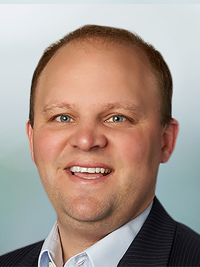
TIMOTHY KINNEY
is partner and payer provider leader at Guidehouse in Chicago.

HAROLD MUELLER
MHA, MBA, is senior vice president, chief revenue officer at BJC Health System in St. Louis.

MARY BETH REMORENKO
is vice president, revenue cycle operations at Mass General Brigham in Somerville, Mass.

KATIE WILLIS
is senior director of patient access at MaineHealth in Scarborough, Maine.
About Guidehouse
Guidehouse is a global consultancy providing advisory, technology, and managed services to the commercial and public sectors. Guidehouse is purpose-built to serve the national security, financial services, healthcare, energy, and infrastructure industries. Disrupting legacy consulting delivery models with its agility, capabilities, and scale, the firm delivers technology-enabled and focused solutions that position clients for innovation, resilience, and growth. With high-quality standards and a relentless pursuit of client success, Guidehouse’s more than 18,000 employees collaborate with leaders to outwit complexity and achieve transformational changes that meaningfully shape the future. Visit Guidehouse.com to learn more.
This published piece is provided solely for informational purposes. HFMA does not endorse the published material or warrant or guarantee its accuracy. The statements and opinions by participants are those of the participants and not those of HFMA. References to commercial manufacturers, vendors, products, or services that may appear do not constitute endorsements by HFMA.
