





Healthcare Finance Technology

AI adoption is increasing in healthcare as providers seek efficiency and cost reduction

Published
March 28, 2025
3:40 pm
Sponsored by Iodine Software
Virtually every industry is exploring how AI and automation can bolster efficiencies and productivity, while also reducing operational costs. That is especially true in healthcare, where the technologies are seen as desperately needed
antidotes to staffing shortages, retention challenges and revenue pressures.
The rate of adoption or exploration of AI-powered technologies is as high as 90% of hospitals or healthcare systems, according to a 2021 report by Sage Growth Partners
Much of current interest in AI is driven by advances in generative AI, which is increasingly focused on enhancing tools for specific industries. According to research firm Gartner, “by 2027, more than 50% of the GenAI models that enterprises use will be specific to either an industry or business function — up from approximately 1% in 2023.”[1]
Hospitals and healthcare systems are among the most eager consumers of AI, Gartner finds. In the summary of another Gartner report, the research company noted: “Healthcare providers are actively evaluating AI technologies and use cases. The potential is metamorphic, and will help reduce clinician burnout, improve patient experiences and democratize data. Provider CIOs should use these predictions to prepare for the impact of AI on care delivery.” [2]
In this HFMA Executive Roundtable sponsored by Iodine Software and moderated by Trish Rivard, CEO and principal consultant at Eliciting Insights, panelists discussed how the right AI technology can free clinicians to focus on high-value work and enable healthcare organizations to accelerate productivity, data accuracy and financial return.
Conversation centered on the challenges of staffing in healthcare, particularly in coding and CDI, and the potential solutions provided by automation. Speakers discussed the importance of identifying denials and addressing them proactively, as well as the need for strategic collaboration between IT and clinical teams.
They also highlighted the potential benefits and limitations of automation in healthcare, emphasizing the need for careful workflow analysis and a balance between automation and human input.
Many hospitals and health systems are grappling with staffing shortages and higher labor costs. What are your experiences with recruiting and retention right now?
David Schweer: We are experiencing staffing shortages systemwide. They are in all areas, really. We have referral programs going on for a lot of different levels of jobs, particularly nursing, revenue cycle, anything specialized and for talented people that you may not see in abundance in the local market.
Fran Jurcak: It’s very clear that we continue to have a people problem in healthcare. We simply don’t have enough workers to fill all the roles needed. The amount of administrative work required, even though it’s all electronic, has also increased. The challenge is how you can leverage the people you do have when a clinical decision is needed.
After we learn to deploy automation, there will be a balance of what we look at as far as offsetting labor with automation, but, I think, we’re still years out for that. Also, if you don’t know the architecture within your organization, and how [the] EHR and other systems are connected, you’re not going to be able to find a good successful implementation. Revenue cycle can’t just go out and adopt automation. If you’re not collaborating with your clinical stakeholders and other operators, it’s not going to work.
Girish Dighe: We’ve seen shortages on operational and clinical positions. I think with cost pressures and the changing healthcare economic landscape, we all face that problem. For some positions, we have decided to look at outsourcing — both onshore and offshore options that can help us both in talent management, recruitment and sustainability.
Sheldon Pink: Like a lot of hospitals, we aligned our enhanced incentive programs around nursing vacancies, developed robust recruitment strategies and started working with colleges to attract nurses fresh out of school.
How are you deploying automation in your organization to fill staffing gaps and scale existing resources?
Schweer: We’ve been automating for years, as far as claims and various elements of revenue cycle. There are also efforts going on to automate in the care management space, to improve the efficiency of the system and make sure all steps are completed [when] needed for discharge. Our entire innovation team is working on this. It has been slow moving. But analytics is coming along.
Geneva Stewart: I’ve been examining how to move things off the backs of people who will probably be retiring, and if automation can assume those responsibilities. I’m looking to see what makes sense and how they can improve our performance. We were high performing, leading within metrics in every kind of way. We want to continue that success and build on it. I’m looking into what tools might help us with this mission, and how automation might help with an accountable analysis for it to be successful.
Jurcak: At Iodine, we harness artificial intelligence-powered intelligent clinical evidence mapping to simplify the process. As an example, we automatically identify documentation gaps and prioritize cases based on clinical evidence.
We’ve been doing this for over a decade, particularly in the CDI space. We have been incredibly successful in enabling organizations to accurately capture the clinical picture of the patient in status and final codes, ensuring that the hospital or healthcare system is reflected appropriately in reimbursement and quality metrics.
Michael Mercurio: At the Mass General Brigham network in Boston, we provide billing services to about 15,000 providers. Our staffing challenges are significant, especially in the coding space. That’s one department where we have traditionally struggled to fill all job openings. Coders are aging out across the industry, and people are not entering the profession as they did in the past. So with a higher volume of work, fewer people and more pressure than ever from our providers related to coding, it’s one area where automation will really help.
Rajarshi Pratihar: I have both a clinical and an executive role. I’m very interested in revenue cycle tools, because I like to ensure that any technology investment I’m making is financially sustainable and capable of growth. So I like to look ahead to see what is coming in the next five to 10 years.
Where has automation been particularly successful?
Ricardo Hernandez: We are a seven-hospital system in Puerto Rico with 31 clinics and more than 5,000 employees. We are not-for-profit, but very profitable. So we run a very tight ship, and we have a very efficient operation.
We do use AI and automation tools in certain areas: some clinical stuff, but mostly call centers and scheduling. We’ve been looking for an application for revenue cycle, and ways to improve our coding and video collection. I think we still need to close the gap between what we want, what we can likely accomplish, with what’s in the market already. We have a significant shortage of personnel. Hiring for hospital coding is a big challenge because Puerto Rico is implementing APR-DRG [all patient refined diagnosis-related groups] on the Medicaid side. There is going to be a big demand for coders, and there aren’t enough skilled people available. So we’re looking for tools to manage that.
Mercurio: A theme that I’ve heard here in a couple of discussion points is that when you’re talking about automation, you have to think about how you are actually messaging and bringing that narrative forward. For example: What approach should you use? Should you do a top-down approach? Or should you do process realignment and upskill workers? That’s something we’re looking at, [deciding] which of those is right for our workforce of the future.
Where is there additional room for growth or improvement?
Schweer: Anything you can do to make scheduling easier for patients and the staff online; anything that allows people to be flexible and nimble is a plus. The challenge is keeping that efficiency going.
Pink: We always correlate automation to a body of work instead of a process. In my mind, if one full-time equivalent (FTE) worker leaves and I can replace them with automation, that means that I can replace all the FTEs with automation. The decision lies in how we do operations to support that different business. It’s not as simple as just dropping automation in place. I’ve seen a lot of examples where people drop automation, and it just doesn’t work because they didn’t change their process. You have to re-engineer how you’re doing business, how it operates.
Dighe: With technology — whether automation or AI — you must have a strong business case for it, with a clear expected ROI. I think vendors should also be on the hook to deploy and execute on that expected ROI. That’s very important because many times health systems deploy technology and then don’t know how to measure the outcomes and drive accountability. Are the benefits on labor costs, time saved, quality improvements or something else? Is it with qualitative or quantitative results? I do feel like that has to be an understanding from the beginning with whom you are looking to partner with on automation and technology.
How are you leveraging AI to remove administrative work from staff members’ plates and enable them to focus on high-value work?
Charles Hogue: We are a group of 14 urgent cares, and we’ve used AI as an advantage over our competitors in several ways. For example, we use a front-end platform to streamline the process for patients coming in. We have been able to increase the time nurses have available to see patients and improve our overall bandwidth. That has led to a 30% increase in our overall collections. We’re using AI and predictive analytics, and we’re moving them into both our overall healthcare system and our urgent cares to help improve overall patient efficiencies.
Pink: I don’t think clinical documentation integrity has a lot of administrative problems. I think the challenge is with quality. It’s really the workflow management of it; and making sure that when they’re capturing certain diagnosis there is an opportunity to enhance quality. And they can do it real time on the patients in the hospital prior to discharge versus looking back at it in two or three months.
How do you assess how much workflow change management your organization can handle to take advantage of a technology solution?
Stewart: I have a revenue cycle analyst team that is part of the IT department. So it’s a real collaboration that needs to work together. It’s about really making sure that we’re ahead of all the changes that could break the system.
Jurcak: It is really about ensuring that the outcome of the documentation is appropriate. That’s an operational thing. You have to make sure that it gets coded correctly. There needs to be collaboration along the way. Let people be the experts at what they are experts at; that’s where I think tech has the advantage to help because you can create those bridges.
Conclusion
Collectively, participants in the HFMA roundtable agreed that the benefits of AI adoption can be significant. While AI tools can improve diagnosis and care management and reduce the administrative burden on physicians, it seems that a few participants are still looking for the best use AI in the revenue cycle.
Conversation also centered on the challenges of staffing in healthcare, particularly in coding and CDI, and the potential solutions provided by automation. Speakers discussed the importance of identifying denials and addressing them proactively, as well as the need for strategic collaboration between IT and clinical teams.
They also highlighted the potential benefits and limitations of automation in healthcare, emphasizing the need for careful workflow analysis and a balance between automation and human input.

Panelists
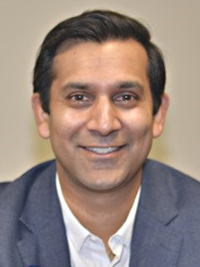
GIRISH DIGHE
PHARMD, MS, system vice president of revenue cycle at OhioHealth in Columbus, Ohio.

RICARDO HERNÁNDEZ
is CEO with Sistema de Salud Menonita in Cidra, Puerto Rico.

CHARLES HOGUE
MBA, is executive director at MedWise in Tulsa, Okla.
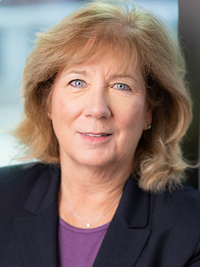
FRAN JURCAK
is chief clinical strategist at Iodine Software in Austin, Texas.

MICHAEL MERCURIO
MBA, is vice president, revenue cycle operations at Mass General Brigham in Boston.
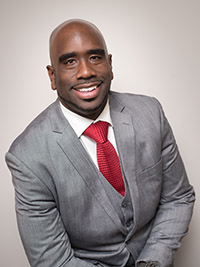
SHELDON PINK
FHFMA, MBA, LSSBB, is vice president of central business office at Methodist Health, Dallas.
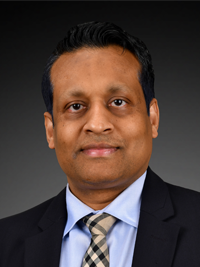
RAJARSHI PRATIHAR
AUD, MHA, MBA, is director of audiology with UTHealth in Houston.
TRISH RIVARD
is CEO and principal at Eliciting Insights in Granby, Conn.

DAVID SCHWEER
FACHE, is director of finance projects at Mercy Siouxland Medical Center in Sioux City, Iowa.
GENEVA T. STEWART
is director, revenue cycle, with Montage Health in Monterey, Calif.
About Iodine
Iodine is an enterprise AI company that is championing a radical rethink of how to create value for healthcare professionals, leaders, and their organizations: automating complex clinical tasks, generating insights and empowering intelligent care. Iodine’s powerful predictive engine complements the skills and judgment of healthcare professionals by interpreting raw clinical data to generate real-time, highly focused, predictive insights that clinicians and hospital administrators can leverage to dramatically augment the management of care delivery – facilitating critical decisions, scaling clinical workforces through automation, and improving the financial position of health systems. For more information, please visit iodinesoftware.com.
Footnotes
[1] Chandrasekaran, A., “3 bold and actionable predictions for the future of GenAI,” Gartner, April 12, 2024.
[2] “Predicts 2024: Healthcare delivery, AI’s proving grounds,” Summary, Gartner Research, Dec. 6, 2023.
